Share William R Johnston's obituary with others.
Invite friends and family to read the obituary and add memories.
Stay updated
We'll notify you when service details or new memories are added.
You're now following this obituary
We'll email you when there are updates.
Select your format and elements to print

IN LOVING MEMORY OF William R Johnston
William R
Johnston
Jan 28, 1936 — May 29, 2013
William R Johnston's Obituary
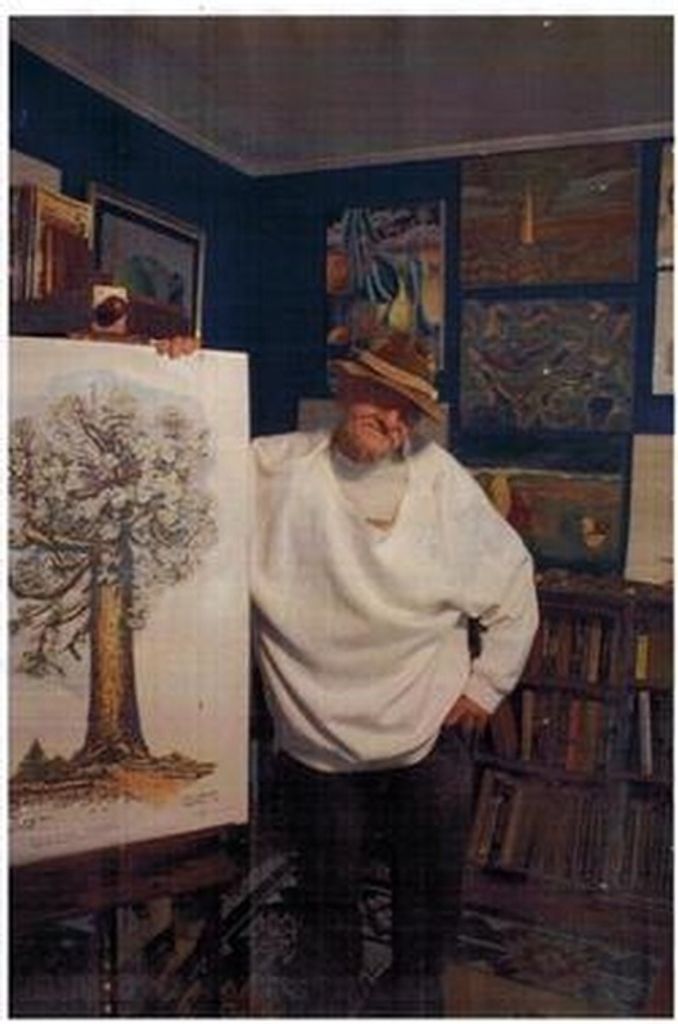
WILLIAM R. JOHNSTON Bill Johnston is one artist who grew up knowing exactly what he wanted to do and then went about doing it. "I was always interested in art," Johnston said. Now 76 years old, Johnston knew he was an artist in his soul at the age of 8. But it took until he was about 32 to commit to the dedication required to become a well-known artist. For Johnston, everything and anything inspires his creativity for art, which was mostly done with pen and ink. "I understand how all ideas work and how they got here," Johnston said. "I'm even fascinated with quantum physics." Johnston also is a very spiritual man and always incorporates that into his artistic endeavors. "For me, it's the wonderment and joy of finding new knowledge and new ways of seeing things and helping people." Johnston, a veteran who moved from California to Louisiana in 2006, was declared a bicentennial artist for the state of New Jersey, and his "New Jersey Revolutionary War Sketchbook" was distributed throughout all schools and libraries in the state by The New York Times. In his career, he was also asked to co-author and illustrate a history book on farming by Rutgers University in New Jersey. But then a series of strokes and heart attacks rendered Johnston 100 percent disabled in his arm and hand. Yet one thing remains clear. "I'm not a victim in any way," Johnston said. He still manages to overcome, and while he can't currently provide the quality art that once touched so many people, he is still a champion for good causes and still seeks to use his abilities for the greater good just like he always has. Johnston's career has been responsible for many good deeds over the years. Because of Johnston's prints of the Camperdown Elm Tree, the rarest of trees in the New York City Park system were saved through his drawing, which built awareness. Johnston also received international recognition as the only artist to have sketched Jack London's Wolf House, which tragically burned by fire some time later in California. Johnston's sketch is the only known existing one of the historic home. Fine Art and History 2 is the proud publisher and distributor for Johnston's drawings and is displayed on www.fineartandhistory.com. The logo on the home page features Johnston's most sophisticated and complex artwork. Portions of future proceeds from some of his prints will be donated to the nonprofit historical societies that have contributed historical data over the years. Though his specialty was always in pen-and-ink renderings, Johnston also has a series of photographs in his portfolio. His prints on California history are a part of the California Room at the State Library in Sacramento. And while art will always possess his heart, Johnston is diving back into some old interests. Having once rocked the banjo before his illnesses and injuries, Johnston now hopes to build a musical instrument this summer that he can play even with his handicap. Johnston still teaches his passion art and history. "Handwriting and drawing require the same skills. It's an analog system," Johnston said. "There are no lines around anything we look at. I teach the process of how we see, not what we see." He teaches a workshop on the division process that he believes leads to every communicative form used on earth. Johnston used funds from teaching over the years to develop programs for nonprofit historical organizations. He was also recognized for his lecturing ability when asked to join the Sonoma County committee that introduced new guidelines for teaching history in schools within California. Johnston is focusing his current attentions on raising money for medical programs through the sale of his limited edition antique and historical medical equipment artwork. He plans to use the funds raised to assist the Halfway There Foundation, Shriner's Children Hospital and Child Life Volunteer Program. The art includes pen-and-ink drawings of the early Colson Model C31B wheel chair, the Stereoptic Skin Clinic, the 1928 Sanborn portable EKG machine and the compound microscope with movable speciman stage. Throughout his full life of multiple experiences, some very negative Johnston manages to maintain a positive, open outlook on the world and accurately and movingly portrays that viewpoint through his work. - Betsy St. Amant
To send flowers with our preferred florist or plant a memorial tree, please visit our flower store.
William R Johnston's Guestbook
Visits: 19
This site is protected by reCAPTCHA and the
Google Privacy Policy and Terms of Service apply.
Service map data © OpenStreetMap contributors